Why We Started Hungry Communications (And Why We Do Things Differently)

Event Pr and Marketing. Summer festival

Starting Hungry Communications wasn’t some big, thought out plan.

It came from years of seeing how PR should work and how often it doesn’t.

We’re a small, family-run PR, marketing and events agency, working with food and drink brands across the UK.

What didn’t work for us

Sam started out as a journalist, then moved into a large London PR agency. On paper, it was exactly where he’d wanted to be – interesting clients, big campaigns and steadily moving up the ladder.

But the higher he got, the further away he was from the part of the job he actually enjoyed.

He spent less time speaking to journalists. Less time with clients. More time managing, reviewing, overseeing.

Which wasn’t why he moved into PR in the first place.

And that’s something we see often in the industry and hear from clients regularly. The more senior you become in many agencies, the less hands-on you are.
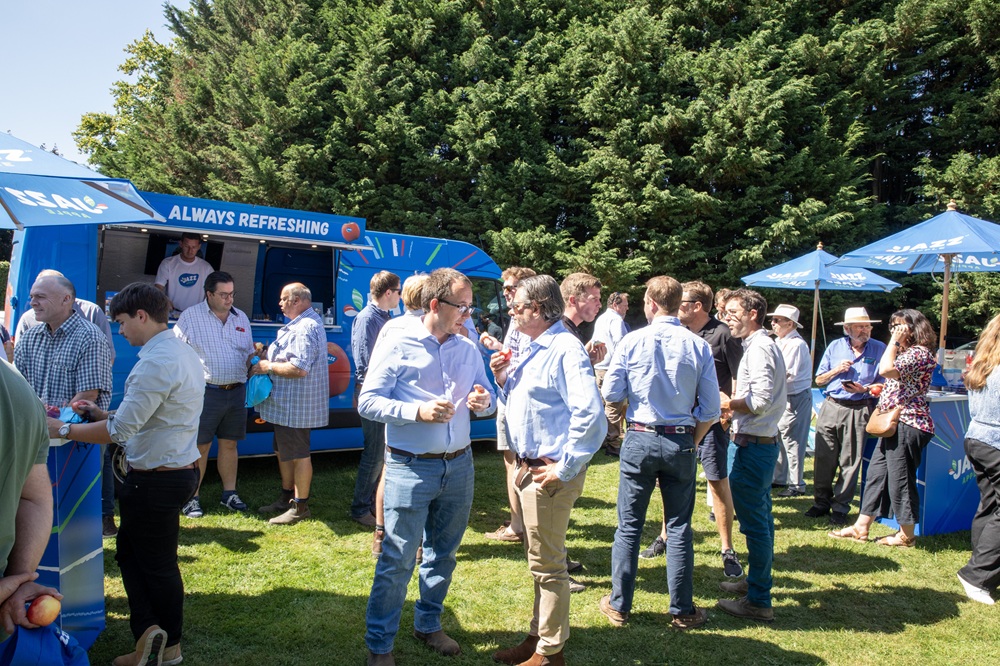
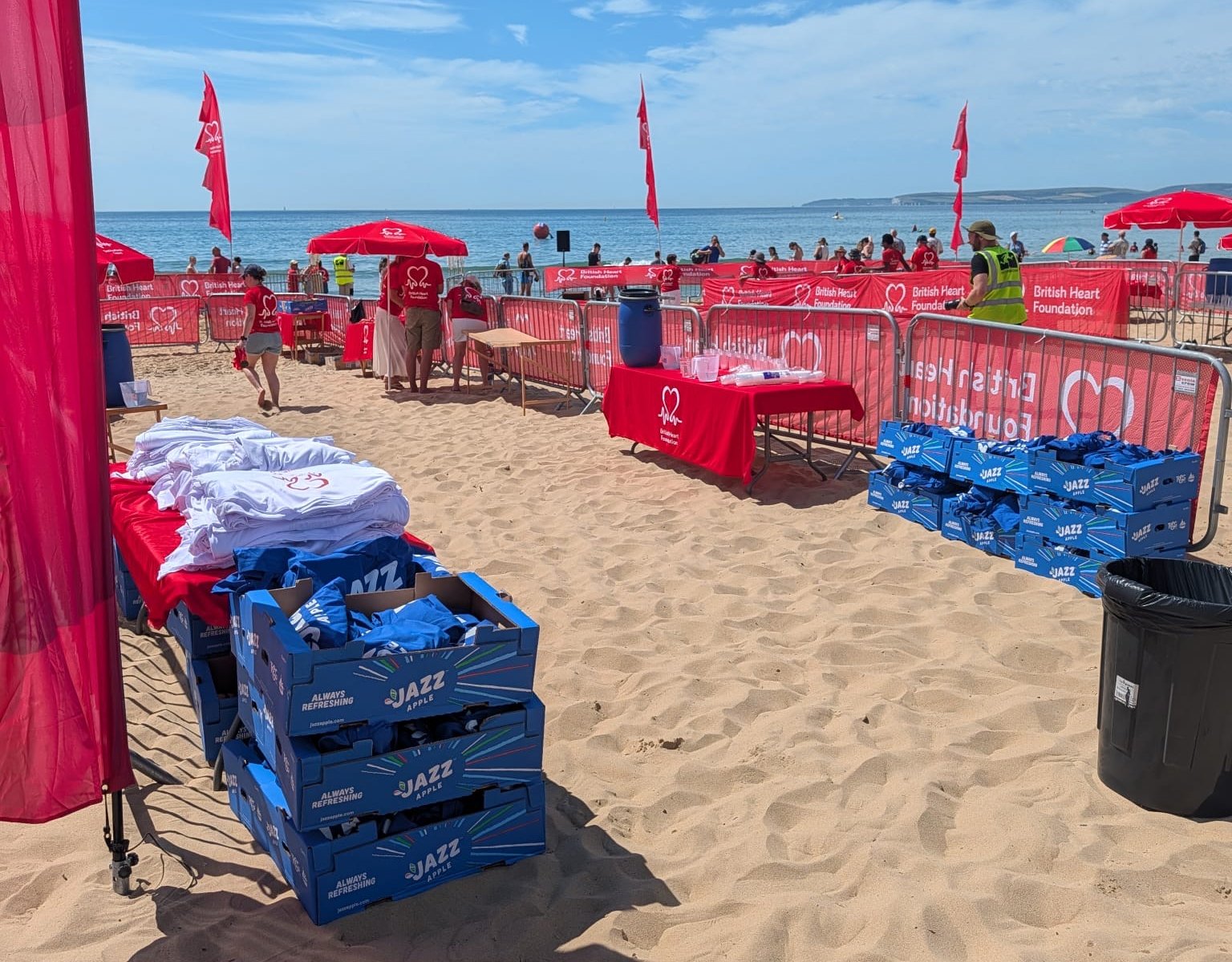
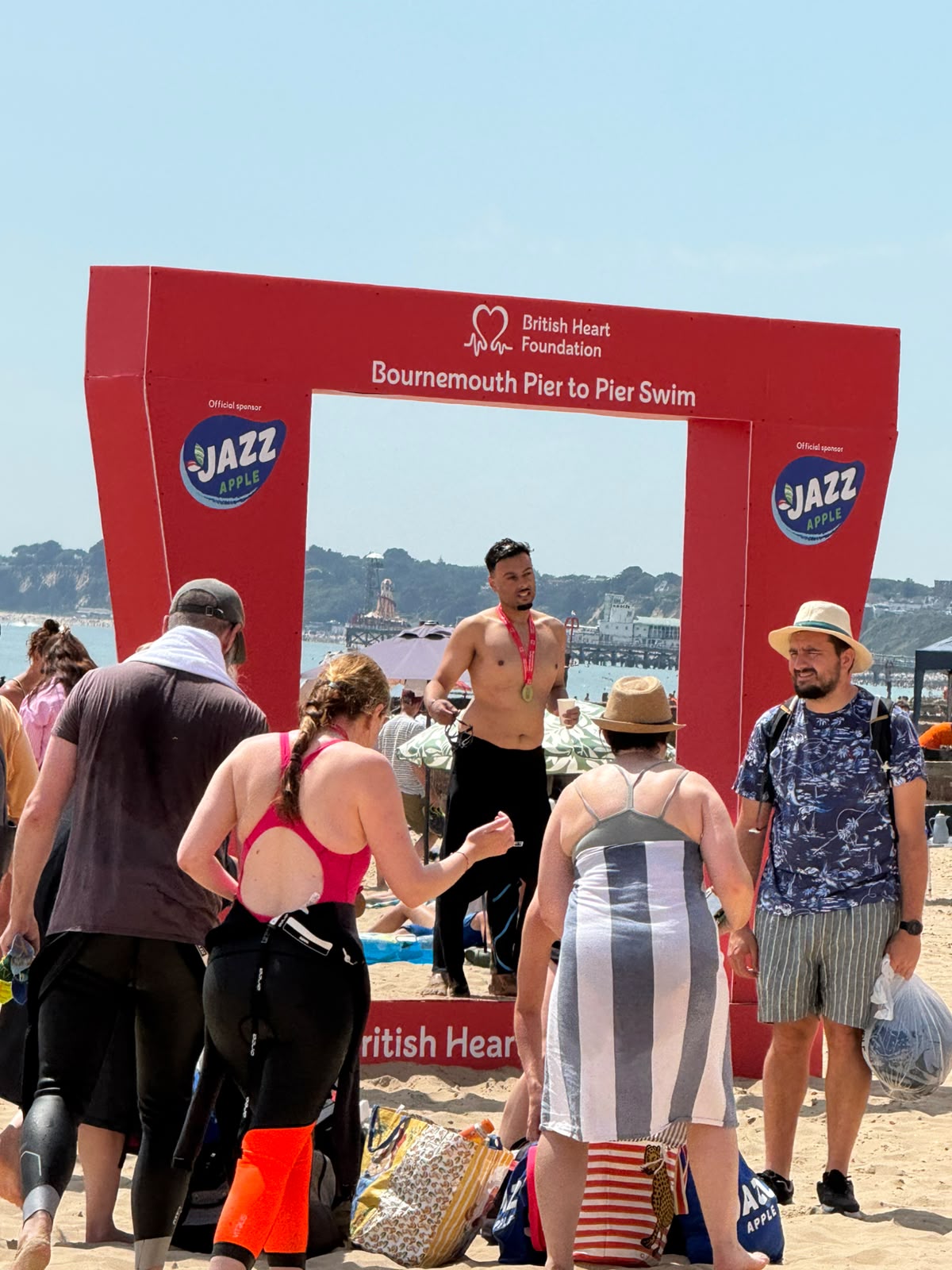
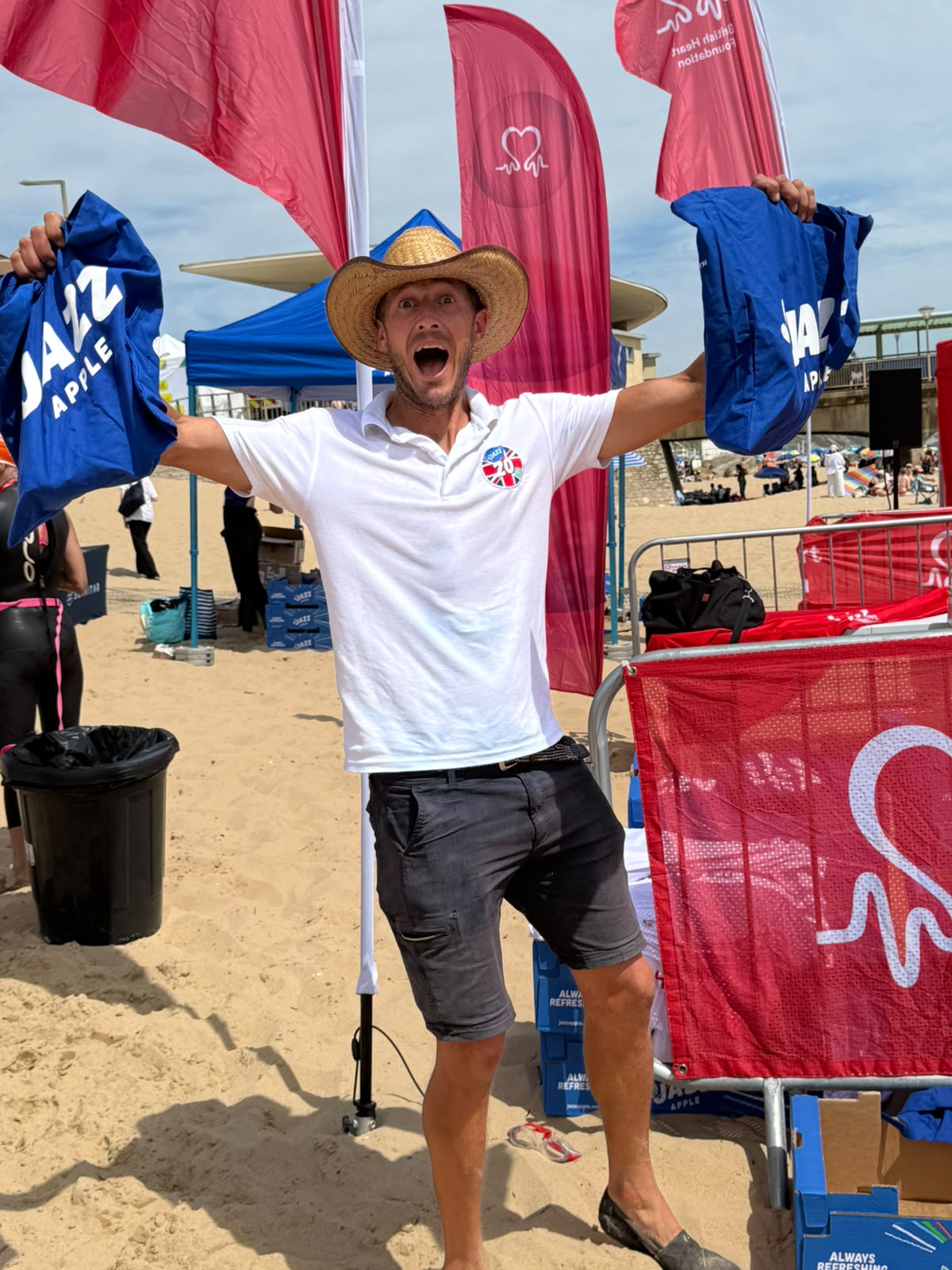
Grower event for Pr and marketing agency with Jazz
A grower event organised for JAZZ™ Apple

The problem with PR

There’s a lot of good work in PR but there’s also a lot that didn’t sit right with us.

Too much jargon for one. We like to talk like people talk.
Too much overpromising. We’ll tell you what we can do and what will work.
Too much distance between the idea and how it all turns out. We’ve had people say to us:
“I know you can’t promise results…”

And they’re right, no one can guarantee exact pieces of coverage.

But you can know what’s likely to work well.
You can have relationships with journalists and understand what works for them.
And you can build a plan that gives a brand the best possible chance of success.

That’s where experience, media contacts and being hands-on really matters.

Why we started a PR and marketing agency

We wanted something different and we wanted to work by our own rules.

We’re a small, family-run team where everyone is involved. We talk to each other, we use our strengths and we know what we’re good at.
The people coming up with the ideas at Hungry are the same people making them happen.
There is no chain to pass you down. It’s us.

Jack joined a few years in, also from a journalism background. This means we naturally see both sides. We know what makes a good story, but also what makes someone actually want to talk about it.

And Hannah (that’s me) came from a PR and marketing background across fashion and digital – bringing that wider view of how PR fits into a brand as a whole, not just as coverage for coverage’s sake.

Between us, we make a great team and we love working together.

We all like people. We like building relationships. We like getting stuck in.
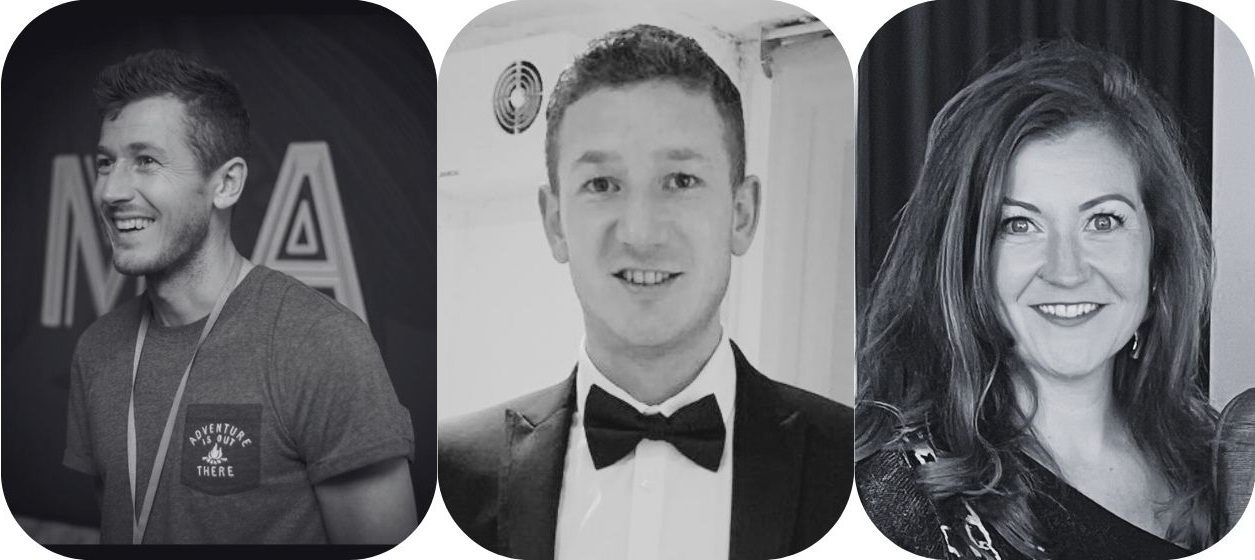
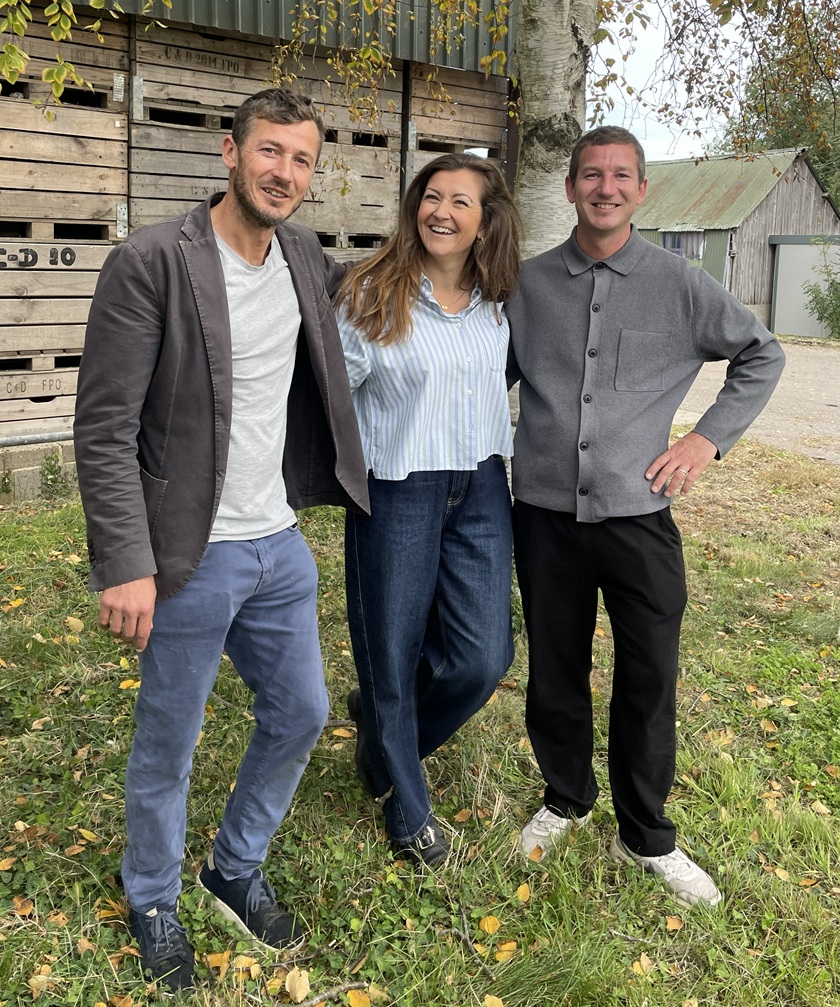
The team at hungry communications a food and drinks marketing agency
L-R Sam Houston, Jack Houston and Hannah Isichei

How we work (and why it works)

We do the work.

From the first idea…
To pitching it…
To seeing it out in the world. Whether that’s someone reading it, eating it, sharing it, or talking about it.

We’re involved in the whole thing. And because we’re small, we can move quickly, try things, change direction, and actually make things happen.

There’s no handover moment where things lose energy. We’ll bring the energy from start to finish and keep pushing until we get the results. We still get a buzz from seeing the results to this day.

We don’t just think about PR, we look at how it connects across marketing, events and the whole brand.
The kind of brands we love

Food and drink is at the heart of what we do and it always has been.

We come from a big family, and a lot of life has revolved around food. Big meals, trying new places, sharing recommendations, planning what we’re going to eat next.

So working with food and drink brands feels natural to us. We genuinely love it, and that makes a difference.

From startups to more established brands, what matters most to us is:

  • A strong product
  • A story worth telling
  • Founders who are up for it
  • And a willingness to try something a bit different

We like doing good work, being hands-on, and helping brands grow through PR, marketing and events.

That’s why Hungry exists.

And if you want to find out more, we’d love to chat.
Coverage of the Month: 20 Years of British JAZZ™ Apples in insideKENT

British JAZZ™ apples photographed for insideKENT lifestyle feature

This month, one of our favourite pieces was for British JAZZ™ apples in insideKENT magazine, celebrating 20 years since the apples were first planted commercially in the UK.

The feature explored the story behind the variety, from its New Zealand origins through to becoming one of Britain’s best known apples, while also spotlighting the growers, flavour profile and long-term success of the brand.

British JAZZ™ apples featured in insideKENT magazine celebrating 20 years in the UK

Why this British JAZZ™ apples feature worked for regional PR

The timing helped.

Anniversary stories are always a strong hook when there’s something genuine behind them and, in this case, there was a lot to work with. British JAZZ™ apples are celebrating two decades in UK orchards, with more than one million trees now planted across counties including Kent, Herefordshire, Norfolk, Essex and Gloucestershire.

The piece also tied together a few different angles which helped give it depth:

  • 20 years of British growing
  • The heritage and story behind the variety
  • Award-winning taste
  • Kent grower involvement
  • Food and lifestyle appeal
  • The wider JAZZ™ Apple Foundation work supporting communities and healthy lifestyles

Rather than feeling overly corporate, the article read as a genuine lifestyle and food feature, which suited insideKENT’s audience perfectly. Particularly as JAZZ™ are grown in the county.

British JAZZ™ apples and the importance of regional storytelling in food and drink PR

One thing we often say in food and drink PR is that regional media still matters hugely.

People connect with stories that feel close to home and this piece did exactly that. Kent plays an important role in the British JAZZ™ apples story, with growers including Monk’s Farm and Clock House Farm helping establish the variety commercially in the UK.

For regional magazines like insideKENT, stories with local relevance, beautiful imagery and a strong food connection work particularly well.

The visual side of this feature also helped it stand out. The photography felt warm, fresh and lifestyle-led, helping bring the orchards, apples and growers to life across the pages.

Orchard photography for British JAZZ™ apples 20 year anniversary feature

Why long-term food and drink brand building matters

Another thing this feature shows is the value of consistency over time.

British JAZZ™ apples have spent years building recognisable branding and consumer trust. From supermarket shelves through to food events and recipe content, the messaging around flavour, crunch and quality has stayed really consistent.

That makes milestone coverage like this feel earned rather than forced.

The article also referenced JAZZ™ being named the UK’s Tastiest Apple eight times, which gives journalists a simple proof point they can immediately understand and build a story around.

British JAZZ™ apples as a great example of lifestyle food PR coverage

We loved this piece because it balanced brand storytelling and celebration with something genuinely interesting for readers about their local area.

It wasn’t just about apples. It touched on British farming, food culture, healthy lifestyles, orchards, flavour and how a product becomes part of people’s everyday lives over time.

For us, that’s often where the best food and drink PR coverage sits, rooted in stories people actually want to read.

A lovely one to work on and a great example of how regional lifestyle press can deliver beautiful, meaningful coverage for food and drink brands.

Read the full article here.

Looking for food and drink PR support?

At Hungry Communications, we work with food and drink brands on everything from press office support and creative campaigns to product launches, events, influencer activity and long-term brand storytelling.

You can find out more about what we do on the Hungry Communications website.

Chat soon, Hannah

Three Things We’re Seeing Work Well in PR Right Now

food and drink PR trends

PR is always changing, but there are a few things we keep seeing work particularly well in food and drink PR, that I wanted to talk about.

From founder-led storytelling to real-life experiences, here are three things we think are genuinely helping brands connect with people right now.

Personality-led brands are connecting

The brands getting attention at the moment tend to feel the most human. Maybe it’s the way we consume things now, maybe it’s how we connect with the world.

People want to know where products come from, who created them and the story behind them. Founders are becoming the face of brands more than ever, whether that’s through social media, press interviews, podcasts, events or simply showing more behind the scenes of the business.

I think Innocent Drinks were probably pioneers of this many moons ago, but now it feels like brands are going even deeper into building personality, community and belonging.

Community matters more than ever

The world can feel quite fast, noisy and disconnected at times. Maybe that’s why people seem to be craving familiarity and connection a bit more. They want to feel part of something and support brands they relate to.

We’re seeing audiences respond really well to businesses that show more personality and bring people into the journey, rather than trying to appear perfectly polished all the time.

A good example of this is TALA. Their founder-led content feels personal, recognisable and genuinely connected to the wider community around the brand, which is probably a big part of why people engage with it so much.

At its core, they’re selling athleisure, but what they’ve really created is a whole world for people to feel part of. Customer events, holidays, cafés, shopping experiences – it’s no longer just “buy this and you’ll feel good”. It’s more about belonging to something bigger and being part of a wider lifestyle and community.

They offer a real support network which I know I want to be part of.

The polished side of marketing still matters of course, but honesty, warmth, personality and inclusion are becoming the heart of the brands people connect with most.

Smaller brands are speaking louder

One of the most exciting things in food and drink PR right now is seeing smaller brands build huge visibility without enormous budgets behind them.

We love start-ups. A brilliant idea, passionate founders and helping bring a story to life without the backing some of the much bigger brands have always relied on.

A few years ago, it was much harder for challenger brands to compete with household names, especially on the retail floor. Now, a strong founder story, clever PR, good content and a loyal audience can take a brand a very long way.

There are also far more ways for brands to get products in front of people than there used to be. Building an ecommerce store is more accessible than ever, social commerce has completely changed product discovery and online marketplaces have opened up huge opportunities for smaller businesses.

We’ve also noticed a real shift in the media. It used to be much harder to secure coverage for brands that weren’t stocked in a major supermarket, as publications often wanted a big retailer link attached to a product. Now, if a brand has a strong website, good storytelling and an engaged audience, journalists seem far more open to covering smaller businesses in their own right.

Discovery is changing

Consumers also seem much more willing to shop around, discover products online and try brands they may never have come across in a supermarket aisle a few years ago. Whether people are looking for something more interesting, better value, more personal or simply something new, there feels like much more openness to challenger brands than there once was.

We’re also seeing retailers and supermarkets become more interested in brands that already have strong identities and engaged communities around them. Buyers are paying attention to what people are talking about online and which brands are building momentum naturally.

Some of the most exciting campaigns we’re seeing at the moment are coming from smaller businesses with clear personalities, fresh ideas and really loyal audiences.

Take RAISE for example. They’ve built a really recognisable brand by staying consistent in how they communicate, from their visuals and tone of voice through to the way they talk about the product itself. The branding feels clean and clear, but there’s still personality behind it too. You get a sense of the people behind the business, the founder story and the bigger mission, while the product itself still stays front and centre.

It also feels like audiences are becoming much more open to discovering brands in new ways too, whether that’s through TikTok, Instagram, podcasts, newsletters, events or recommendations from creators they trust.

Why experiential marketing still works in food and drink PR

Even with so much happening online, people still really value real-life experiences.

In food and drink especially, getting products into people’s hands still makes a huge difference. Tastings, festivals, pop-ups, sampling campaigns and events give people a chance to properly connect with a brand in a way digital alone often can’t.

The more digital everyday life becomes, the more people seem to value experiences that feel real, social and memorable. We’re definitely noticing people wanting to spend more of their time and money on things they can actually do, enjoy and share with other people, rather than simply buying more stuff.

That’s probably why experiential marketing continues to work so well in food and drink PR. Whether it’s a supper club, a festival stand, a pop-up shop or a creative sampling campaign, people remember how brands make them feel.

Events no longer end when people go home

Often the best experiential campaigns don’t stop at the event itself.

Brands are becoming much better at connecting those moments back into the wider brand journey too. Whether that’s through QR codes, sign-ups, exclusive discounts, creator content, social sharing or encouraging people to continue engaging with the brand afterwards online.

Experiences also tend to create some of the best content naturally. A good event doesn’t just exist for one day anymore. It lives on through social media, word of mouth, photo sharing and conversations afterwards.

We’ve seen this ourselves at food festivals and live events. The brands that often create the biggest reaction aren’t necessarily the ones with the biggest budgets, but the ones that give people something fun, unexpected or genuinely enjoyable to engage with.

JAZZ™ is a great example of this. Rather than simply advertising a product, they created an experience people actively wanted to be part of and share with others.

As people spend more time online than ever before, real-world connection and shared experiences seem to be becoming even more valuable.

PR never stops moving and that speed will only get faster but that’s probably why we still enjoy working in it so much.

But right now, the brands we’re seeing resonate most are the ones that feel human, confident in who they are and willing to connect with people in a more real and memorable way.

Contact us if you’d like to chat more. Hannah

How We Work With Brands at Hungry

Hungry food and drink marketing agency team

Over the years, our food and drink marketing agency has worked with brands from all over the world, from start-ups to household names.

As a family-run food and drink marketing agency, we’re hands-on, collaborative and probably a bit more informal than most. We have honest conversations and ideas can move quickly, as the people you meet are the people doing the work.

Here’s a little insight into how we like to work with brands.

A Hands-On Food and Drink Marketing Agency

The people you meet are the people doing the work.

We don’t pass projects down through layers of account managers or disappear after the first meeting. Whether it’s PR, content creation, social media, events or digital marketing, we stay closely involved throughout.

We Look Beyond Traditional PR

The strongest results usually happen when PR, social media, events, digital content and sales strategy work together rather than separately.

Sometimes a great press story can fuel social content for weeks. Sometimes an event creates retailer conversations. Sometimes SEO supports a wider brand campaign. We always try to match everything up – whether that’s looking at it ourselves or working with in-house teams.

Creative Food and Drink Marketing Ideas Matter

We’re constantly thinking about fresh ways to get products in front of people. We write lists, long lists of ideas, when we meet new brands.

That could mean experiential marketing, creative media angles, influencer partnerships, trade campaigns, sampling opportunities or content designed to stop people scrolling.

The aim is always the same: create marketing that people actually remember, want to taste and want to share.

Long-Term Relationships Help Brands Grow

Between us, we’ve got more than 50 years of combined experience in food and drink PR and marketing.

Over the years, we’ve built strong relationships across media, retail, hospitality and the wider industry. We’ve also worked with brands from all over the world, including businesses launching into the UK market for the first time.

Those relationships and that experience help us move quickly and spot opportunities.

We work like a team because we are one

Being a ‘family’ business means we’ve been a team from day dot. From football on the drive, to taxis home after nights out, to covering for each other when we were younger -we’ve always worked together and know each other inside out.

Knowing each other so well means there’s a lot of trust, quick thinking and honest conversations, which we think clients appreciate.

Most projects start the same way for us: a conversation about where a brand wants to get to, what makes it different and how we can help get it in front of the right people.

Is it time for a chat with Hungry?

Whether it’s a start-up finding its feet or an established brand looking for fresh ideas, we always try to keep things creative, collaborative and straightforward.

Get in touch if you’d like to chat. Hannah

JAZZ™ Apple van: Taking a food and drink brand on the road

food and drink brand activation van

Experiential food and drink marketing is one of the best ways to get people to spend a bit of time with a brand.

Not just walk or scroll past it. It gives people a reason to stop, try something and have a quick chat.

The JAZZ™ Apple van is a great example of how that works in real life.

We led and managed the project, from the first design idea through to build, stickers and certification. The aim was simple and clear – with a chunk of Hungry fun. Make something that is eye-catching and looks good, but more importantly, works hard at busy UK events.

Built for experiential food and drink marketing at events

This is not just a van that turns up and looks nice.

It’s big, bright blue and easy to spot from across a showground, field or exhibition space, which helps when you’re one of hundreds of stands.

Everything is packed inside it. Stock, equipment, everything you need for a full day of product sampling. The team travels in it too, so you arrive, open up and you’re ready to go.

There’s no complicated set up. Once we’re there, we’re pretty much ready to go.

For food and drink event marketing, that kind of simplicity makes a big difference and gives you time to look at other details. Particularly spending time with customers.

Make product sampling something people enjoy

Product sampling sits at the heart of most food and drink marketing, but it only works if people actually want to stop. So, we gave people an area to sit and enjoy.

Deck chairs out the front. Space to sit and rest their legs. Somewhere people can pause rather than rush past. It gives people more time to get to know you and try the product, in this case, apples.

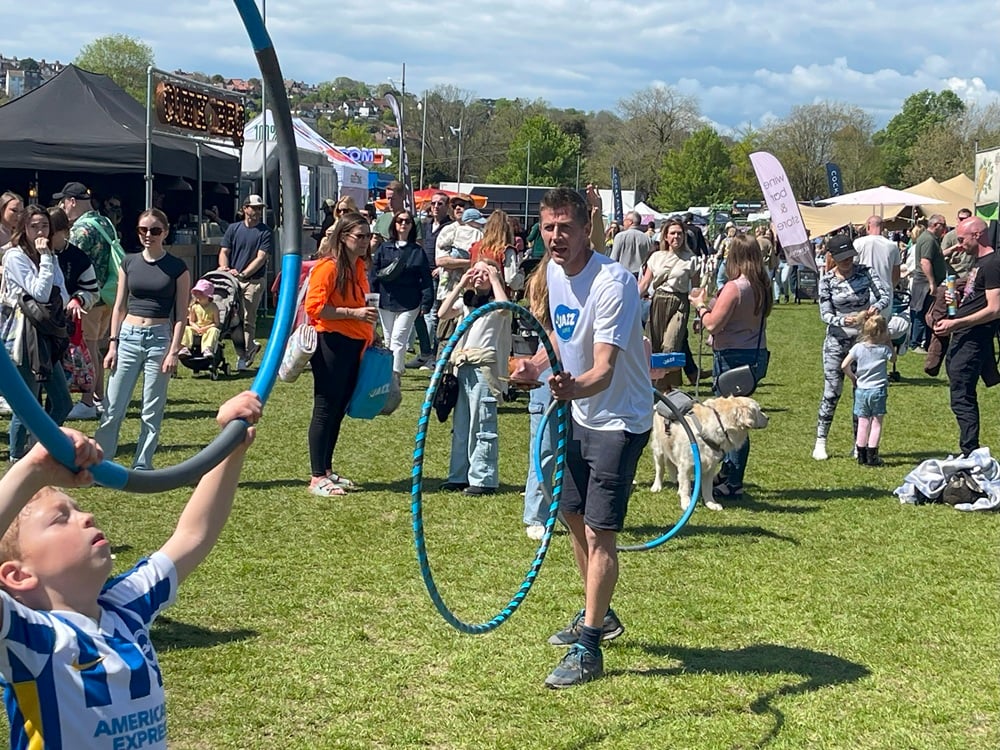
Then we added simple things to draw people in. Hula hooping, limbo, apple challenges for kids. All things to make some noise, movement, laughter and fun. A place where parents can sit and let their kids enjoy some games – whilst eating a healthy snack too.

It’s nothing over the top but just enough to create a bit of atmosphere and keep people there a little longer.

JAZZ Apple experiential food and drink marketing campaign

Taking experiential food and drink marketing across the UK

The JAZZ™ Apple van has travelled all over the UK as part of a wider experiential food and drink marketing campaign.

The last two years have included:

Across these, JAZZ™ was in front of over 500,000 people.

That’s a lot of face-to-face time, which is exactly what this kind of marketing is about. Plus, the van will be back on the road this year – so more awareness and more samplings.

Turning interest into trial through experiential marketing

One of the biggest strengths of experiential food and drink marketing is that people can try the product there and then.

At Brighton Foodies Festival alone, over 10,000 apples were sampled and sold across one weekend.

That’s not just awareness. It’s people tasting, enjoying and being far more likely to pick them up again later. And with a big blue van, friendly sampling team and memories made at the event – they’ll remember the brand when they see it next.

Why this approach works so well

There’s a reason brands keep coming back to this kind of activity.

  • You go to your audience instead of waiting for them.
  • You show up consistently, in different places, with the same look and feel.
  • You give people a bit more time with the product.
  • And you get real conversations, which is what we love best about this type of marketing.

More than just a marketing van

The JAZZ™ Apple van has become a key part of how the brand shows up.

It carries everything needed for events. It stands out in busy environments. It creates a space people want to spend time in and we have feedback of people returning to us again and again at different events.

Most importantly, it helps turn a quick taste into something people remember.

For food and drink brands, that’s what good experiential marketing should do.

If you’re looking at ways to bring your brand to life like this, we’re always happy to have a chat.

Hannah

Our Favourite Press This Month (And Why It Worked) – April 2026

Guardian press coverage

This month’s pick is a great drinks PR coverage example, and a big one for us featuring Karisimbi White Rum.

A feature in The Guardian’s The Filter, written by one of the UK’s most respected drinks writers, highlighting some of the best rums available right now.

And yes, our client made the cut.

The Coverage

The piece, “Best rums tested in the UK”, is exactly the kind of coverage drinks brands want to land.

It’s authoritative without being intimidating, genuinely useful for readers, and sits in a place where people are actively looking for recommendations. Not just browsing, but thinking about what to buy next – something for themselves or maybe a present. An easy click and buy once they’ve found their star product.

Karisimbi was included as part of that curated edit, alongside other standout bottles, which immediately positions it in strong company.

PR Coverage of the Karisimbi rum in the Guardian

Why This Drinks PR Coverage Works So Well

There are a few reasons this worked so nicely, and none of them are about blasting out a press release and hoping for the best.

1. It’s built on a relationship

We’ve worked with this journalist over time, keeping in touch, sharing updates and understanding what she’s interested in.

That means when something new and relevant comes along, we’re not starting from scratch. There’s already trust there.

It also means we know the kind of pieces she writes. Regular tasting round-ups like this are a staple, so we can spot the opportunity early and make sure our products are part of the conversation.

We are also on her call-out list – she knows what we do and the type of brands we look after.

2. We got the product in front of the right person

This sounds obvious, but it’s often where things go wrong.

Tasting pieces rely on the journalist actually trying the product. So it’s about timing it right, making sure samples are sent when they’re needed, and that they arrive and stand out.

Karisimbi is a great example of a product that delivers when it lands on someone’s desk. It looks the part, it has a story, and most importantly, it tastes brilliant.

3. The product has a story beyond the liquid

Karisimbi isn’t just another rum.

There’s a strong narrative behind it, including a link to gorilla conservation, which gives it a purpose beyond the bottle. That kind of detail matters, especially in lifestyle features where readers are connecting with more than just flavour.

Plus, we were quite deliberate with what we sent. White rum isn’t the obvious choice at the moment, which actually worked in our favour. It meant we weren’t up against all the bigger, darker styles, and it gave us a better chance of standing out. This one’s an award winner too, and not your typical white rum, so it really holds its own.

It gives the journalist something extra to talk about and helps the product stick in their mind and mouth.

4. It fits the format perfectly

Not every product suits every piece.

Round-ups like this need variety, quality and a reason to be included. Karisimbi ticks those boxes, so it doesn’t feel forced or out of place.

It’s a natural fit, which is exactly what you want.

The Bigger Picture

This is a great reminder that strong coverage often comes down to consistency.

Keeping relationships warm. Knowing what journalists are working on. Sharing the right products at the right time.

There’s no big reveal or one-off trick here. Just doing the basics really well, over time.

And when it comes together like this, the results speak for themselves.

If you want your brand to be part of conversations like this, get in touch. We’re always happy to chat.

Until next time. Thanks, Hannah